The Future of Mixed Reality and How it Will Impact Key Industries
An analysis of how mixed reality technologies are transforming industries like healthcare, education, and manufacturing.
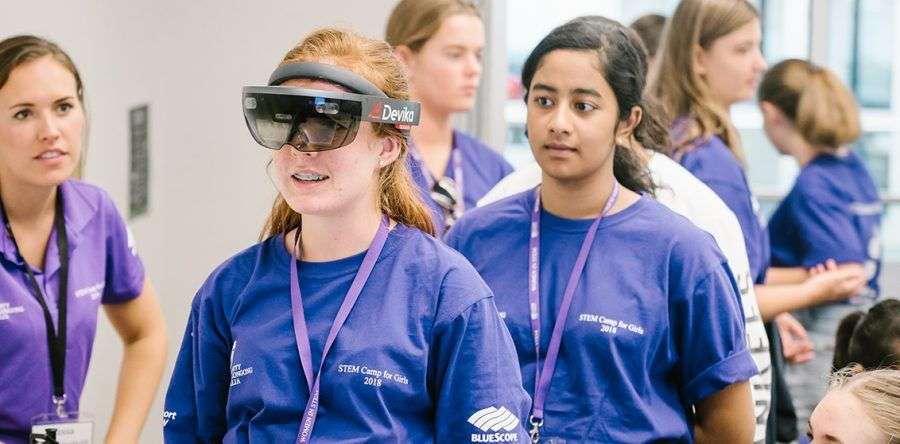
When mixed reality (MR) first emerged many people thought that it was the next evolution for video games, but it’s more than that. Many different industries have been and will continue to be transformed with MR, which includes virtual reality (VR) and augmented reality (AR). Some of these industries include education, data visualization, healthcare, public safety, entertainment, sport, and design.
Mixed Reality in Education
Mixed reality supports the flipped classroom method, an approach that encourages students to watch lectures at home and use classroom time to expand on these concepts.
An example of this is Google Expeditions, a software program that allows students to travel to exotic locations, providing visual context to history and geography lessons. While these experiences are primarily passive, companies like Immersive VR Education are using dynamic storytelling to create active lessons that involve students more deeply with subject material.
Mixed Reality in Data Visualization
Data is more widely available than ever before, however conceptualizing it through standard measures, such as pie charts and spreadsheets, can be challenging.
Immersive technology provides an alternative way to view data with the added benefits of being easier to comprehend and improving the speed of data analysis.
We have witnessed this during our collaboration with Visikol, who are applying virtual reality to enhance the way scientists are examining organs and body tissues.
Virtual Reality in Healthcare
VR has a broad set of capabilities in healthcare and medicine. It can provide simulation training for rare procedures, be a diagnostic device, and help to implement robotic surgery and treat post-traumatic stress rehabilitation.
Virtual Reality in Public Safety Training
Research provides evidence that public safety training is more effective when experienced in VR than traditional classroom activities. Based on this research, VR could provide training to a range of services such as the police force, emergency rescue, the fire department, and paramedics.
Virtual Reality in Entertainment
In 2015 the United Nations partnered with Chris Milk to make the VR film ‘Clouds over Syria’ that used 360 footage. It was the first-ever VR film, designed to support the UN’s campaign to draw attention to the struggles of vulnerable communities, particularly refugees.
The scene starts with a young Syrian refugee sitting on the floor in a cramped room. She takes you on a journey through her refugee camp. You sit with her in an improvised classroom and watch children journey through the muddy streets. The VR elements provided the audience with a captivating experience, which enabled the audience to understand and view the situation with more compassion.
Since ‘Clouds Over Syria’ was filmed, 360 cameras have become more widely available and are of better quality, which is creating more immersive experiences today.
Mixed Reality in Sport
Mixed reality in sport provides benefits for both fans and professionals. For the viewer, it creates an incredible, immersive experience. For example, in the 2016 Rio Olympics, VR broadcasts were offered through a partnership with the NBC and BBC, which allowed spectators to become even more engaged with the sport they were watching.
Fans are also enjoying more immersive experiences, thanks to augmented reality (AR). Companies such as Sky and Fox provide engaging experiences by utilizing sensors, IoT devices, and micro cameras, which allow fans to hear and see what the players do. They’re also utilizing interactive displays on their screens through AR, which highlight players’ performances and statistics.
For professionals, mixed reality is changing the way performances are reviewed, and training sessions are run. This is particularly through simulations that expose athletes to different conditions and environments. This technology is already being used in the car racing industry by drivers.
With companies like LNTS working on world-leading healthcare solutions with motion capture bodysuits for recordings, we can see how mixed reality systems will help athletes to improve their training and performance.
Mixed Reality in Design
Googles’ Tilt Brush is just the beginning of a new 3D design process. It utilizes VR technology to turn your room into a canvas. This, along with software like Gravity Sketch, is providing new dimensions for beginners and professional designers to explore.
The far-reaching impact of mixed reality is due to the ability of VR to support experiential learning, which is relevant to an array of disciplines. From workplace training to classroom learning, we predict that it’ll be a game-changer for many industries, improving the way we learn, work, and interact.
If you would like to start utilizing mixed reality, get in touch with our development team here.