Great Lessons From The Greats Of Our Coding History
Exploring insights from coding pioneers like Ada Lovelace, this article delves into foundational lessons in programming history.
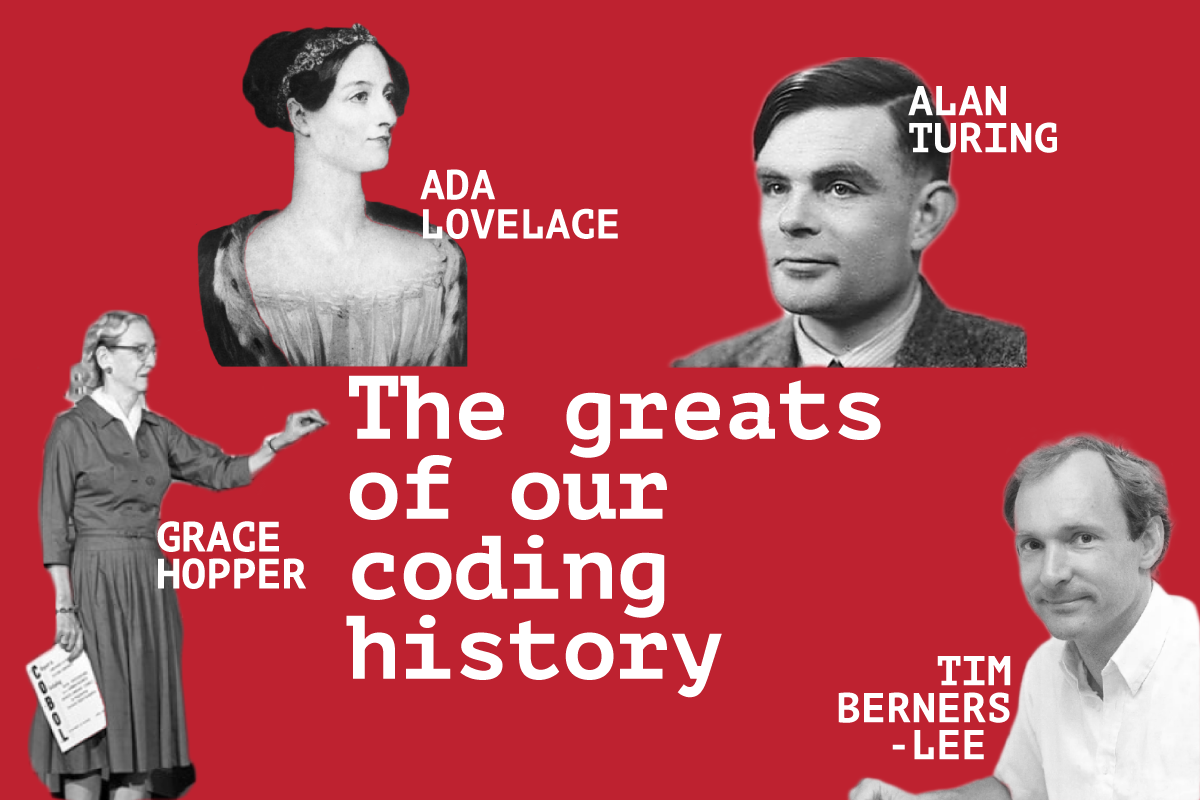
Introducing some of The Greats of our coding history, whose innovations have not only shifted the trajectory of our industry but of our world.
And each innovation began simply as an idea.
Often doubted and disregarded as having any substantive effect, by persevering with their ideas these people have created some of the most life-changing solutions of all time.
In recognition of their contributions to the tech industry and world, we’re sharing snippets of their stories and the lessons they’ve taught us about venturing into the unknown.
Grace Hopper
“The only phrase I’ve ever disliked is, ‘Why, we’ve always done it that way.’”
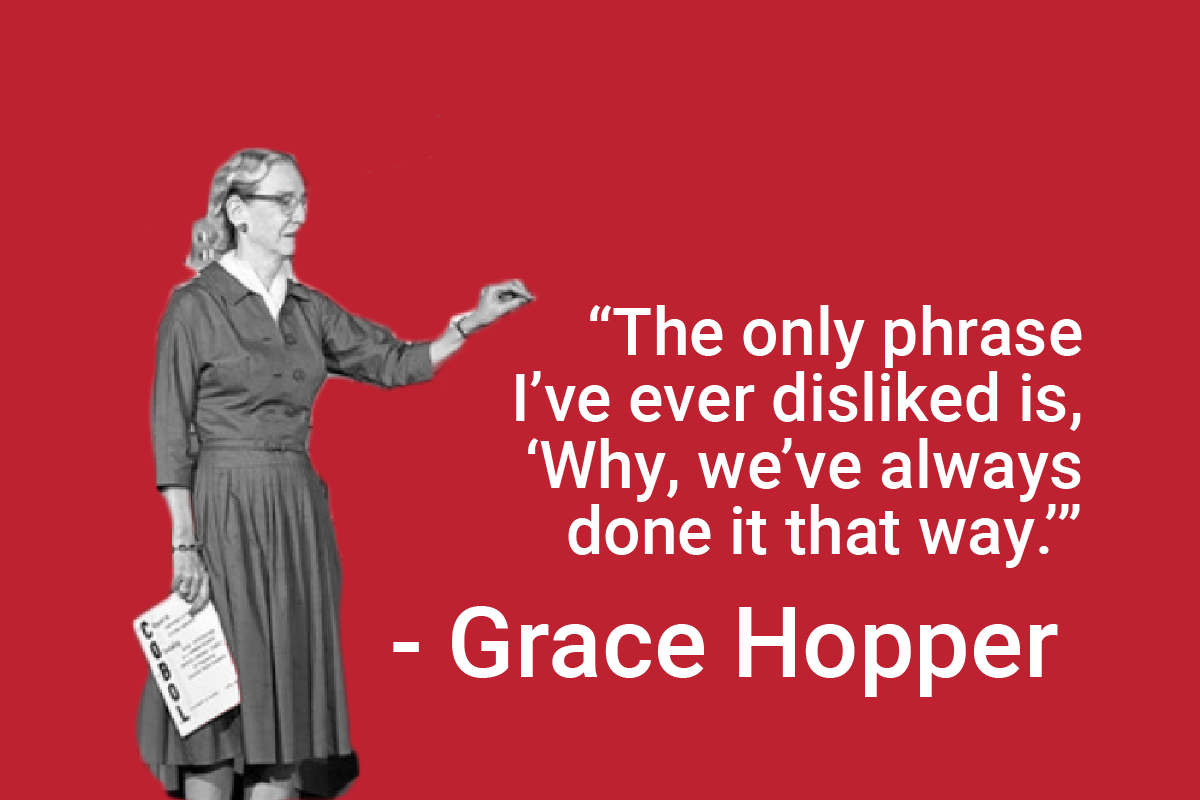
Inventor of the computer compiler, creator of one of the earliest linkers, programmer of MARK 1 in WW11 and UNIAC 1, and one of the first women in the 1930s to receive a Ph.D. in mathematics from Yale.
Introducing computer programming pioneer and United States Navy rear admiral, Grace Hopper.
Writing code is complex enough, but back in the early 1940s programmers had the added task of manipulating and processing symbols. While Hopper’s proposal to create a system that would allow programmers to write in English was dismissed for three years, under the presumption that it was impossible, she persevered with her idea and invented the first-ever computer language compiler in 1952. Based on this innovation, she later led a team that developed the language, COBOL, which has become one of the most widely used business computer programming languages of all time.
Great Lessons From Hopper
Shifting the course of the programming industry and making history for women, Hopper’s relentlessness, perseverance, and determination teaches us the importance of being unafraid of going against the grain, backing your ideas, and having enough grit to see them to fruition.
Alan Turing
“We can see only a short distance ahead, but we can see plenty there that needs to be done.”
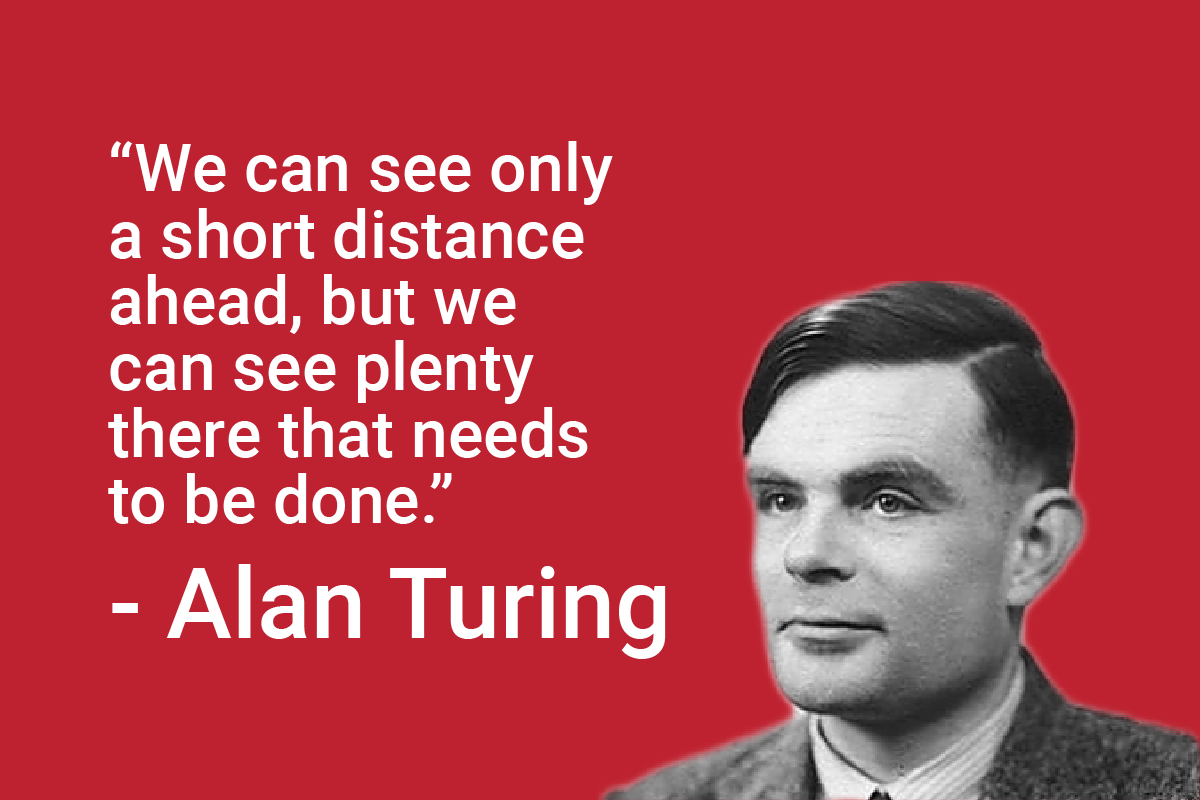
Introducing mathematician, logician, computer scientist, philosopher, codebreaker, and the Father of theoretical computer science and artificial intelligence, Alan Turing.
Most famous for his work deciphering and decrypting the Enigma Code code during WW11, Turing uncovered many life-changing technological breakthroughs. This includes Turing’s contributions to WW11 which are believed to have shortened the war by years, saving thousands of lives and advancing the development of computer technology immensely.
Not only did he pave the way forward for the computer industry, but in 1950 proposed the idea that machines could think like humans. His theorizations in ‘Computing Machinery and Intelligence’ along with his work on the Turing Test reference the concept now known as artificial intelligence.
Great Lessons From Turing
While the 2014 movie adaption of Turing’s biography ‘The Imitation Game’ leads us to believe that Turing created the machine that cracked Enigma alone, this achievement was a collaborative effort.
Ada Lovelace
“The more I study, the more insatiable do I feel my genius for it to be.”
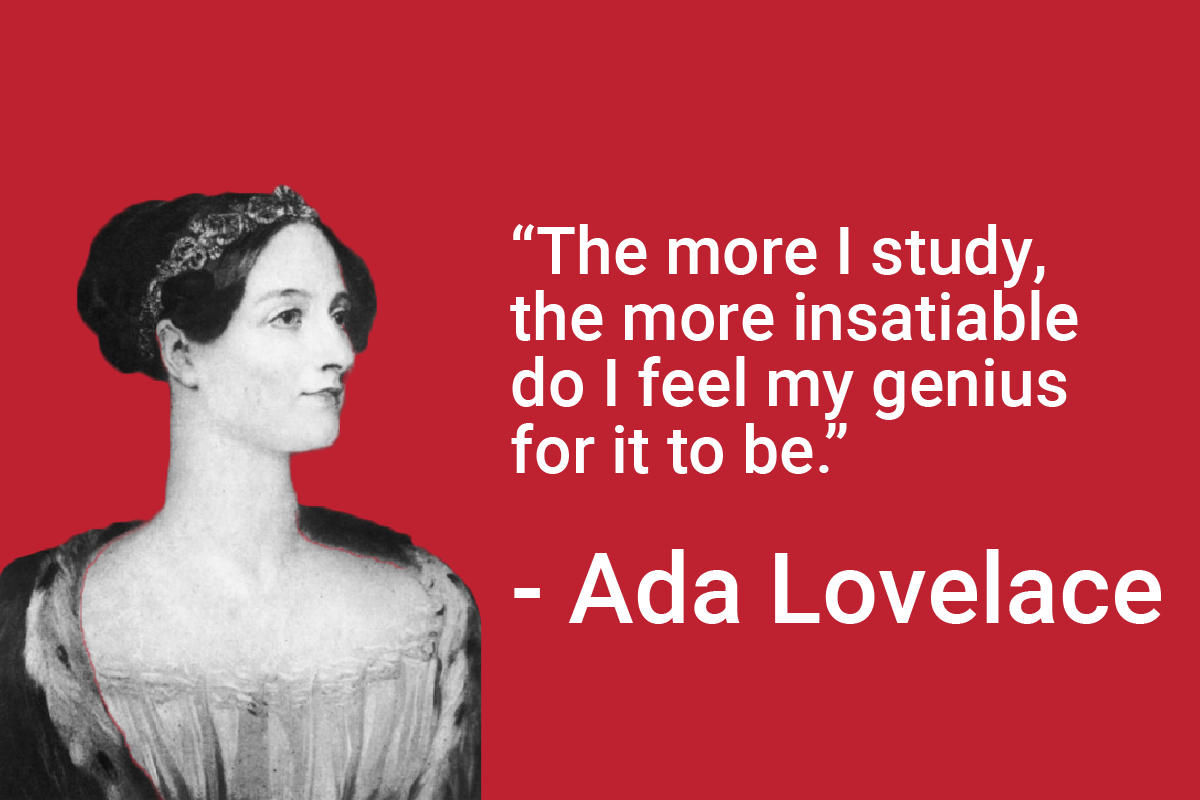
Introducing the world’s first computer programmer, the enchantress of numbers, mathematician and visionary, Ada Lovelace.
Taking us back to the 1800s, Lovelace was a pioneer in computer programming who made significant contributions as one of the only women in the industry.
She worked alongside the father of computers, Charles Babbage, and had a unique understanding that computers could follow sequences and patterns. Lovelace’s ingenious insights led her to develop the first computer algorithm, making her the first computer programmer in the world. Her ingenuity and creativity also led her to propose that the Analytical Engine (generally considered to be the first computer) could do more than just calculations.
Years ahead of her time, she’s paved the way for the computers we know and use today.
Great Lessons from Lovelace
Lovelace’s curiosity, open-mindedness, and fascination for machines reminds us to first and foremost, love what you do.
Sir Tim Berners-Lee
“The power of the Web is in its universality. Access by everyone regardless of disability is an essential aspect”
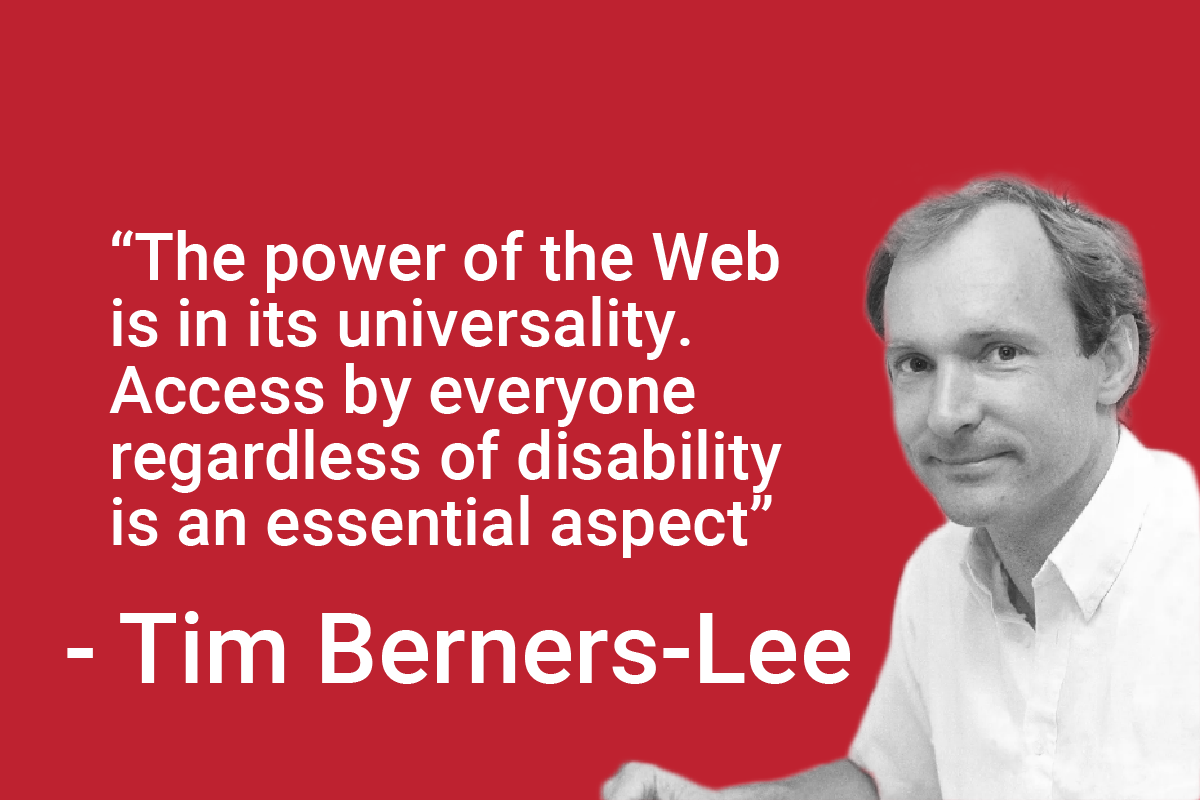
Introducing computer scientist, academic, and inventor of the World Wide Web, Sir Tim Berners-Lee.
In 1989 Berners-Lee proposed a never-before-seen concept that would go on to transform the meaning of communication, learning, and knowledge sharing across the globe – The World Wide Web.
Berners-Lee speaks about the process of inventing the Web as “a step of generalizing, going to a higher level of abstraction” to create something that’s never been done before. Restored by CERN in 2013, the first-ever website is still up and running.
Committed to increasing accessibility to the web for everyone, Berners-Lee co-founded the World Wide Web Foundation with Rosemary Lee and was knighted for his contributions in 2004.
Great Lessons From Berners-Lee
As impressive as technology is, people should always be the priority. Best said by Berners-Lee himself, “The most exciting thing was not the technology but the community and spirit of people getting together.”
While each of these pioneers inspire and spur creativity in different ways, there is one unanimous lesson woven throughout each of their stories. It is a reminder that great innovations don’t just appear. People make them happen.